Coffee Labels Explained: Organic, Fairtrade, Rainforest Alliance and Origin
Sustainability seals, organic labels and origin certification answer different questions. Knowing which question each one answers is the fastest way to read a coffee bag.
A premium coffee bag can carry half a dozen claims: an origin name, "100%", an organic seal, a Fairtrade or Rainforest Alliance logo, a cupping score, a roast date. They are often read as a single badge of quality, but each one is a separate promise made by a different body under different rules. This guide sets out what the main labels certify, using the official thresholds, and where origin certification such as Jamaica's fits in.
The short version
| Label | Question it answers | Key threshold |
|---|---|---|
| Protected origin (for example Jamaica Blue Mountain) | Was it grown in the named place, to the named standard? | Set by the origin's own rules, such as JACRA's 2018 regulations |
| USDA Organic | Was it grown and handled under organic rules? | 100%, 95% or 70% organic content depending on the claim |
| Fairtrade | Did producer organisations get a minimum price and premium? | US$1.80/lb minimum for washed arabica since August 2023 |
| Rainforest Alliance | Was the farm certified to an environmental and social standard? | At least 90% certified coffee for the seal |
| Specialty score | How did it cup? | 80 points or more on a 100-point scale |
Origin certification
Origin certification answers the most basic question: is the coffee what its name says it is? For Jamaica Blue Mountain, that means coffee grown in the mapped Blue Mountain area, handled by registered growers and licensed dealers and coffee works, graded, and exported under the control of the Jamaica Agricultural Commodities Regulatory Authority. The details are on our JACRA certification page. Other origins use other tools, from the EU's protected geographical indications to Hawaii's labeling law; our page on coffee geographical indications compares them. Origin certification says nothing about farming methods, wages or carbon.
USDA Organic
In the United States, organic claims are governed by the National Organic Program. Under 7 CFR 205.301, a product labeled "100 percent organic" must contain only organically produced ingredients; a product labeled "organic" must contain at least 95% organic ingredients; and "made with organic" requires at least 70%. For a single-ingredient product like coffee, "organic" in practice means the coffee itself was grown and processed under certified organic rules. Organic certification tracks the coffee through the supply chain but does not verify a protected origin name, and it is not a claim about flavour.
Fairtrade
Fairtrade International sets a minimum price that buyers of Fairtrade coffee must pay producer organisations, plus a premium for community or business investment. From August 1, 2023, the minimum for washed arabica rose to US$1.80 a pound, with natural arabica at US$1.75, a Fairtrade Premium of US$0.20 a pound, and an organic differential of US$0.40 a pound, according to Fairtrade's price announcement. In 2026 Fairtrade announced a further rise in the washed arabica minimum to US$2.00 a pound for contracts signed from December 1, 2026, Daily Coffee News reported. When market prices are above the minimum, buyers pay the market price plus the premium.
Fair Trade USA is a separate organisation with its own standard. It did not follow the 2023 increase and kept its arabica minimum at US$1.40 a pound at the time, World Coffee Portal reported. The two logos are not interchangeable.
Rainforest Alliance
The Rainforest Alliance seal certifies farms against an environmental and social standard. Under its 2020 labeling policy, products carrying the new seal must contain at least 90% certified ingredient, and coffee, including ground coffee that mixes arabica and robusta, counts as a single-ingredient product. Older rules allowed coffee to carry the seal with much lower certified content, so the date of a claim matters. Shade is not a required Rainforest Alliance criterion; the label built around shade is Smithsonian Bird Friendly, explained in our guide to shade-grown coffee.
Specialty scores
A cupping score is not a certification of origin or ethics. The long-standing shorthand for specialty coffee is a score of 80 or more on a 100-point scale, judged by trained cuppers. Our specialty coffee page explains how the definition has broadened.
Why a bag can carry several labels
The labels are not alternatives. A single coffee can come from a protected origin, be certified organic, be sold through a Fairtrade cooperative and score above 80 points, and each claim is checked by a different organisation, often by a different auditor at a different time. The reverse is also true: a coffee can carry none of these seals and still be genuine, carefully grown and excellent, because some producers choose not to certify given the cost and paperwork involved. When comparing two bags, it helps to list the claims each one makes and ask which matter to you, rather than counting logos.
What none of these labels tells you
- Freshness. No certification covers roast date or storage. Look for a roast date on the bag.
- Taste. Organic, Fairtrade and Rainforest Alliance are about how coffee is produced and traded, not how it tastes. For Blue Mountain's flavour, see what Blue Mountain coffee tastes like.
- That a different origin name is genuine. A Fairtrade or organic seal on a bag labeled Blue Mountain does not prove the coffee came from the Blue Mountains. Origin claims are checked under the origin's own rules; our fake Blue Mountain coffee guide covers the warning signs.
- How much reaches the farmer in every case. Minimum prices apply to certified sales by certified producer organisations, not to every bag of coffee from a region.
Reading a Blue Mountain bag
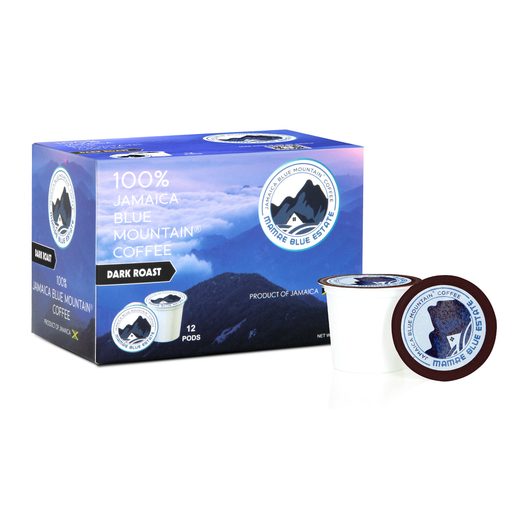
For Jamaica Blue Mountain, the claims that matter most are the exact name, the word "100%" (or the word "Blend", which allows as little as 30% Blue Mountain under Jamaican rules, see Blue Mountain blend), a named producer, roaster or licensed exporter, and a roast date. Sustainability seals can be a useful extra, but they are a separate question from origin.
Disclosure: this site is published by Mamre Blue Coffee, a Jamaica Blue Mountain estate (see about us), so we rely on official and independent sources for the facts on this page.
Questions people ask
Does organic certification prove where coffee was grown?
What is the Fairtrade minimum price for coffee?
Is Fair Trade USA the same as Fairtrade?
How much certified coffee must a Rainforest Alliance product contain?
Sources
- 7 CFR 205.301 Product composition (Legal Information Institute, Cornell)
- Fairtrade Coffee Price Announcement, March 30 2023 (Fairtrade International)
- Fairtrade International Makes Historic Raise to Coffee Prices (Daily Coffee News, Mar 30 2023)
- Fairtrade International Raises Price Minimums Again (Daily Coffee News, Aug 4 2026)
- Fair Trade USA Freezes Coffee Prices and Premiums (World Coffee Portal, July 2023)
- What percentage of certified ingredient does a product with the seal contain? (Rainforest Alliance)
- Rainforest Alliance Labeling and Trademarks Policy, May 2020
- The Jamaica Agricultural Commodities Regulatory Authority Regulations, 2018 (Jamaica Gazette Supplement, March 2 2018)
Taste the benchmark
More in Coffee knowledge
- Coffee Leaf Rust: Symptoms, Spread, Control and VarietiesCoffee leaf rust is the fungal disease that ended Ceylon's coffee industry and cost Latin America an estimated $1 billion after 2012. This guide covers what it is, how it spreads, how farms control it, and why resistant varieties are under pressure.
- Coffee Roast Levels: Light, Medium and Dark Roast ComparedRoast level changes a coffee more than almost any other step after harvest. This guide explains what light, medium and dark mean, how they change the cup, and what a 2024 study found about caffeine.
- Ethiopia's Coffee Trademarks: Harrar, Sidamo and YirgacheffeFrom 2004 Ethiopia registered Harrar, Sidamo and Yirgacheffe as trademarks abroad and licensed them royalty-free, a different route to protecting famous origin names than Jamaica or Colombia took.
- French Press vs Pour-Over: Taste, Body, Health and MethodA French press steeps coffee and strains it through metal; a pour-over drips it through paper. That one difference changes body, clarity, cleanup and even how much cafestol reaches the cup. This guide compares the two step by step.
- History of Jamaica Blue Mountain Coffee, from 1728 to JACRACoffee reached Jamaica in the 1720s; the Blue Mountain name became a regulated, certified product only in the 20th century, through the 1944 clearing house, the 1950 Coffee Industry Board and, since 2017, JACRA.
- How to Brew Jamaica Blue Mountain Coffee at HomeBrew Blue Mountain like any good washed arabica, but gently: fresh whole beans, about 1 to 2 tablespoons per 6 ounces of water, water just off the boil, and a grind matched to the method so that its mild, low-bitterness character is not over-extracted.
- How to Cup Coffee: A Step-by-Step Guide to Coffee CuppingCupping is how coffee is bought, graded and scored around the world. It looks like a ritual, but it is a simple, repeatable recipe that anyone can follow at home with a scale, a kettle and two spoons.
- How to Spot Fake Jamaica Blue Mountain CoffeeJamaica's regulators have chased counterfeit Blue Mountain coffee for over a decade; buyers can screen out most of it by reading the label carefully and asking where the coffee came from.